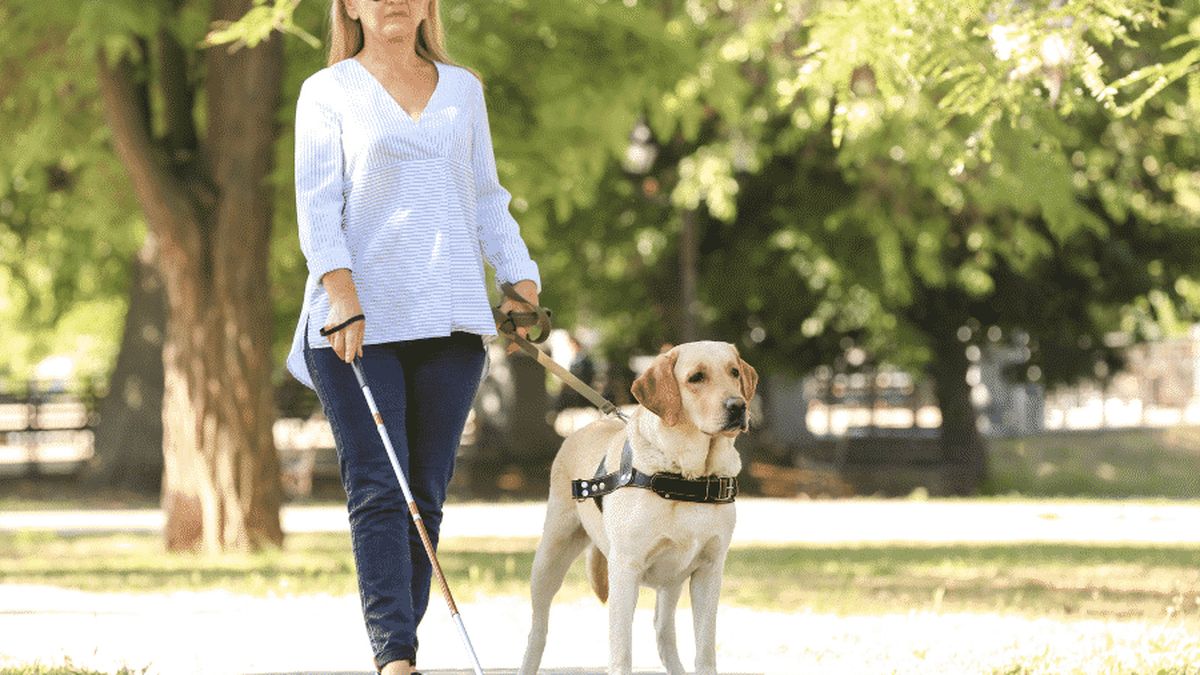
For each of their trips, the
blind people or visually impaired are accompanied by a dog. They have been specifically trained to serve as a guide to a visually impaired person. Many associations in France take care of the training of the dog, its follow-up with the master, and placement in a foster family.
The main stages of training a guide dog for the blind
Puppies are selected from the age of two months. We favor certain breeds known for their skills and sociability: labradors, golden retrievers or short-haired collies.
The steps for
training guide dogs for the blind are divided into two main parts: integration into a host family then training in a specialized school. This takes up the first three years of his life before he becomes the companion of a visually impaired person.
Read also:
How to become a web developer? Some explanations
Learn about life in a host family
In the first stage in a foster family, the puppy benefits from all the attention necessary for its development, as well as the acquisition of some specific skills for the future.
guide dog : sociability with humans and other animals, familiarization with different environments, etc. After being regularly evaluated from seven months old, then undergoing some medical tests, the dog leaves its foster family on its first birthday.
Read also:
How to become an actor or comedian to work on films or in cinema?
Become a guide dog in eighteen months
Then start the training itself. THE
dog enters a school or a specialized center where, for a period of between eighteen months and two years, he is taught to obey and to search, that is to say to recognize an element useful for his future master such as a seat, a door , stairs, pedestrian crossing, bus stations, etc.
He is also taught the guidance codes with which the chine will receive orders from his master. He also learns to read the signs to know when to cross the street, but also to get on public transport, to go around objects and to keep his owner away from any risk of falling or accident. The dog learns to function in different places in the countryside as well as in the city, in stations, transport, shops, etc.
The end of this training period is marked by contact days where the dog gets to know people who could be intended for him. This is an opportunity for these people to learn how to use a guide dog, talk to them, give them confidence; etc. The dog then receives a certificate of aptitude following tests in real situations.
Read also:
Real estate credit in 2021: will rates increase with the crisis?
More than a guide, a companion
Then comes the day when the dog is handed over to its visually impaired master. A new life then begins for him, and for his master who will gain autonomy and above all a company like no other. The dog and their master are chosen based on the compatibility of their characters and behavior. For example, a man who walks slowly would have difficulty with a dog who walks quickly, and vice versa.
During the joint life of the dog and its master, monitoring is carried out by the trainers. Several meetings take place during the first year, then are spaced further apart thereafter. At the age of eight, a first veterinary assessment is carried out on the dog. At ten years old, the dog is entitled to a well-deserved retirement. He can stay with his master, with his family or find another host family.
Read also:
How to obtain your registration card easily and quickly?
Key players at every stage
During its life as a guide dog, the animal encounters several actors: its host families, educators and its master. A very rich life punctuated by volunteering and donations. Everyone can contribute to the training of guide dogs. Either by participating financially through donations (they are subject to a tax reduction). Either by offering to foster the puppy in its first year or when it retires. You can also become a volunteer educator if you have completed the necessary training. All information is available on the website of the
French Federation of Associations of Guide Dogs for the Blind.
More than a guide, the guide dog is a life companion. It provides its master with autonomy, security, but also attention and love. A notion that we often forget, but which is essential in the relationship between two beings.