
What is a speed variator and what is its use?

Are you interested in DIY or the technical functioning of your everyday equipment? Have you heard of variable speed drives? Maybe not! We invite you to discover in detail its advantages as well as its usefulness with some examples of machines where it plays a crucial role. But before that, let's understand together the principle of this necessary, but often overlooked, part.
 There are many pieces of equipment using this device, both in the industrial sector and at home, in everyday devices.
Read also: Autodistribution: the auto parts specialist
There are many pieces of equipment using this device, both in the industrial sector and at home, in everyday devices.
Read also: Autodistribution: the auto parts specialist
The speed variator, what is it for and how does it work?
As its name suggests, this type of device aims to be able to vary the speed of a motor. Indeed, many equipment, industrial or not, need to change speed during their operation. However, the speed variator will also make it possible to obtain a constant speed on the equipment concerned. Speed variators are electronic devices which will therefore operate on motors which are also electric. They will vary, for example, the frequency and the voltage supplied to the electric motor. An engine does not always need to run at full speed all the time! This is precisely where the speed variator comes into action: it reduces the frequency supplied to the motor to which it is wired. Hence its name of regulator, since we will regulate frequency and voltage to adapt them to the use of the motor concerned. Read also: What exactly does an automobile agent do?A device not to be confused with a servomotor
It is easy to confuse a variable speed drive with a servo motor. However, these are not at all the same devices, be careful! The servomotor will be integrated into what we call a servo system comprising numerous elements: the motor, the controller, a feedback system and of course the famous servomotor. The latter will receive the command amplified and transmitted previously by the servo system which will itself have received this command from the control system. The servomotor also has a sensor, because it will compare how the motor is positioned in relation to the variables indicated. On the other hand, and unlike the speed regulator, the servomotor will absolutely need an encoder for the electrical switching process. Read also: Automotive: everything you need to know about the silent blockThe advantages of the speed variator
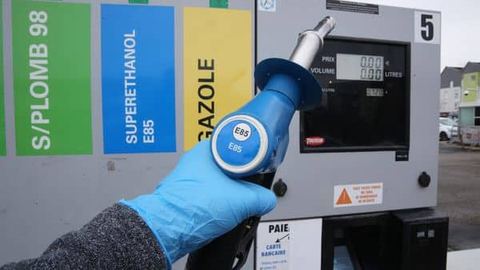
The major advantage found in these devices will be energy savings. With the ecological, but also economic issues linked to the use of electricity, we understand better that speed variators are becoming more and more useful, even essential for multiple uses! A speed variator will also play a role in terms of safety. It prevents the engine from gaining too much unnecessary speed, which limits the risk of malfunction, but also of overheating. The other big advantage of the device is therefore to extend the lifespan of the electric motor to which it is applied. Read also: Ethanol E85: the price of this ecological fuel costs 2 times less than SP98 or SP95Uses of the speed variator
There are many pieces of equipment using this device, both in the industrial sector and at home, in everyday devices.
Read also: Autodistribution: the auto parts specialist
In the industry
Speed controllers designed for industrial use are often accompanied by optimized software allowing them to be easily adjusted. Able to operate in a scalar manner or in vector flow control, they are available in different versions. Certain industrial speed variators will thus be perfectly suited to uses relating to water; the waterproofing factor will thus be essential. Other models will be designed more for the electric motors of equipment that carries out mass production (e.g. factories). The power of the speed variator will depend on the motor(s) on which this device will be required to intervene. This is why we will find in the industrial world models of power and size generally greater than those used for personal equipment. Read also: EGR valve: tips and tricks on this important element of your carAt individuals
We all have many electrical devices or devices using an electric motor. A speed variator, for example, will be essential to the proper functioning of an electric car. It is he who will supply the vehicle's engine with energy depending on the driver's degree of acceleration. It is also what will transform the direct current into alternating current, allowing the proper functioning of the electric motor. We also find speed variators among air conditioning devices, for example. Thanks to these electrical devices, the air flow is adapted to the user. The variator also prevents a drop in condensing pressure which could damage the air conditioner. Read also: Financing new and used carsArticles similaires

Car/Motorcycle
Why use an auto agent?

Car/Motorcycle
How to change a cracked windshield?

Car/Motorcycle