How to hide a scar after a hair transplant?

The different options for hiding a scar after a hair transplant
After undergoing a hair transplant, you may be left with an unwanted scar on your scalp. Don't worry, because there are different options to hide this scar to regain a natural and confident appearance. In this article, we will look at the best methods to help you effectively hide your scar after hair transplant.
Option 1: Long hair
If you have long hair, then you are lucky because this option is the easiest and most natural to hide a scar after hair transplant. Long hair can often camouflage the scar by hiding it under the hair. Simply let your hair grow and style it to cover the affected area. You can also try different hairstyles and cuts to hide the scar in a more natural way.
Option 2: Scalp micropigmentation
Scalp micropigmentation is an innovative method that can be used to effectively conceal a scar after hair transplantation. This technique involves injecting pigments into the scalp to recreate the appearance of shaved hair. It helps hide the scar by creating the illusion of a denser and more uniform hairline. Scalp micropigmentation is a long-lasting option that can provide natural, aesthetically pleasing results.
Option 3: Camouflage products
Concealers are a great option to temporarily hide a scar after a hair transplant. There are a variety of products on the market today that are specifically designed to cover scars. Hair concealers, also known as hair fibers, are powder products that bind to existing hair to create a fuller appearance and hide thinning or scarred areas. Simply apply the product to the scar and set it with a setting spray. Concealers are easy to use and provide instant results.
Option 4: Scalp Makeup
Scalp makeup is a popular option to hide scars after a hair transplant. This is a special makeup that can be applied to the scalp to cover imperfections. You can choose a makeup that matches your hair color and apply it to the scar using a sponge or brush. The makeup will blend in with your skin and will effectively hide the scar. Make sure to use waterproof makeup for long-lasting wear.
If you have a scar after a hair transplant and want to hide it, there are different options that can help you regain your confidence. Long hair, scalp micropigmentation, camouflage products, and scalp makeup are all effective solutions to hide the scar. Do not hesitate to consult a hair transplant specialist for advice tailored to your individual case. With these different options, you can regain a natural appearance and effectively hide your scar after a hair transplant.
Cosmetic products to hide a scar after a hair transplant
Hair transplantation is a common cosmetic procedure to remedy baldness or hair loss. Although this procedure can provide impressive results, it can also leave visible post-operative scars on the scalp. If you have had hair transplants and want to hide these scars, fortunately there are cosmetic products specially designed for this purpose. In this article, we will present to you the best options available on the market to help you regain your confidence.
1. Camouflage powders
Camouflage powders are one of the most popular cosmetic products to camouflage post hair transplant scars. They are easy to use and provide excellent coverage. These powders are often formulated with keratin fibers that naturally blend with your existing hair, making scars less visible. Simply sprinkle the powder on the areas to be treated then gently blend them with a brush or your fingers.
Some well-known brands in this field include Toppik And . They offer a wide range of shades to suit different hair colors and coverage options to effectively conceal scars.
2. Corrective pencils
Concealer pencils are another popular option for hiding post-hair transplant scars. These pencils are typically formulated with highly concentrated pigments for optimal coverage. You can use them by gently drawing light lines over the scars, then blending with your fingers or a suitable brush.
Brands like Laura Mercier And Mac Cosmetics offer a range of concealer pencils in different shades to match your skin color and hair. They are easy to apply and allow you to specifically target the areas to be camouflaged.
3. Corrective creams
Corrective creams are another effective alternative for concealing post-hair transplant scars. These products are often formulated with pigments and reflective agents that help hide imperfections and even out skin tone. Corrective creams are usually applied in small amounts to scars and then blended for a natural finish.
Renowned brands like Dermablend And Make Up Forever offer concealer creams with buildable coverage, meaning you can adjust the intensity of coverage to suit your needs. Some of these creams are also waterproof, which guarantees optimal hold throughout the day.
If you are looking to camouflage post-hair transplant scars, the cosmetic products mentioned above can help you regain your confidence. Whether you opt for camouflage powders, concealer pencils or concealer creams, there is a wide range of brands and shades to suit your specific needs. Remember to choose quality products and learn the correct application techniques to achieve natural and satisfying results. With the right cosmetic products, it is possible to effectively hide scars and feel good about yourself.
Hairdressing techniques to hide a scar after a hair transplant
Introduction :
Hair transplantation is an increasingly popular cosmetic procedure to treat hair loss. However, after a transplant, it is normal to have a scar which may sometimes be visible. Fortunately, there are effective hairstyling techniques to hide these scars and regain your confidence. In this article, we will introduce you to different methods to hide scars after hair transplantation.
1. Hairstyles with long hair:
If you have long enough hair, you can opt for hairstyles that help camouflage the scar. Here are some ideas:
- Hair down: By simply leaving your hair down, you can arrange it to cover the scar.
- Braids or braids: by making braids or braids, you can easily hide the scar while creating a trendy look.
- Buns or ponytails: By putting your hair up in a bun or ponytail, you can hide the scar in a stylish way.
2. Hairstyles with short hair:
If you prefer to have short hair, it is also possible to camouflage a scar after a transplant. Here are some options:
- Bangs: by opting for asymmetrical bangs or longer bangs on the side, you can easily hide the scar.
- Tapered hairstyles: by choosing tapered cuts, you can play with the strands of hair to hide the scar.
- Disheveled hair: By adding volume to your hair and tousling it, you can draw attention away from the scar.
3. Camouflage products:
In addition to different hairstyles, there are also products specifically designed to camouflage scars after a hair transplant:
| Product | Description |
| hair powder | Hair powder is a product that helps add volume to hair and hide thinning areas or scars. |
| Densifying spray | The densifying spray is a product that provides density to the hair, helping to camouflage scars by making the hair thicker. |
| Camouflage pencil | The camouflage pencil is a product in the form of a pencil which allows you to temporarily color scars, making them less visible. |
With these different products, you can effectively hide your scar and regain a uniform hair appearance.
Conclusion :
After a hair transplant, it is completely normal to have a scar, but that does not mean you should leave it visible. Thanks to the different hairstyle techniques and camouflage products available, you can easily hide your scar and regain your confidence. Feel free to experiment with different hairstyles and use the products that best suit your needs. It is important to feel good about yourself and take full advantage of your new hair.
Medical and surgical solutions to treat a scar after a hair transplant
After a hair transplant, it is common to end up with a scar on the donor area. This scar can sometimes be visible and cause some aesthetic discomfort. Fortunately, today there are several medical and surgical solutions to effectively treat these scars and restore a natural appearance. In this article, we'll review these different options to help you find the one that best suits your needs.
Medical solution 1: Corticosteroid therapy
Corticosteroid therapy is a commonly used medical solution to treat scarring after hair transplantation. It consists of the application of topical corticosteroids to the scar in order to reduce its volume and improve its appearance. Corticosteroids have anti-inflammatory and immunosuppressive properties which help reduce the redness, itching and irritation associated with the scar. They can also promote tissue regeneration and reduce scar coloring.
Medical solution 2: Platelet-rich plasma (PRP) injections
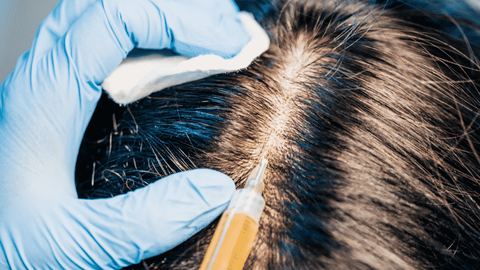
PRP is an increasingly popular medical solution for treating scarring after hair transplantation. This is a technique that involves taking a sample of the patient's blood, centrifuging it to extract the platelets, and then reinjecting this platelet-rich plasma directly into the scar. PRP contains growth factors that stimulate tissue regeneration and promote healing. This technique can help improve the appearance and texture of the scar, making it less visible and softer.
Surgical solution 1: “Trichophytic closure”
Trichophytic closure is a surgical technique used to minimize the appearance of scars after a hair transplant. It involves making an incision at the scar and closing it, ensuring that the edges of the hair overlap. This technique helps reduce tension on the scar and obtain a more aesthetic result. Trichophytic closure can be performed during a hair transplant session or as an independent procedure. It can help make the scar almost invisible.
Surgical solution 2: FUE hair transplantation
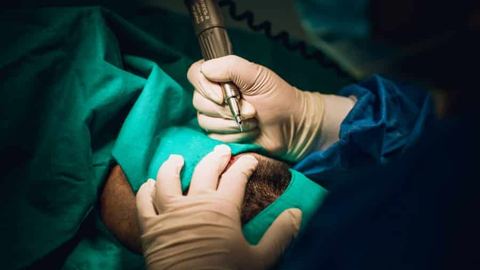
FUE (follicular unit extraction) hair transplantation is a surgical technique increasingly used to treat scars after a hair transplant. This technique involves individually removing hair follicles from the back of the head using a punch and re-implanting them in the area where the scar is present. FUE hair transplantation helps camouflage the scar by adding natural hair to the affected area. This technique offers an aesthetically satisfying result and effectively hides the scar.
In conclusion, there are several medical and surgical solutions to treat scars after a hair transplant. Corticosteroid therapy and PRP injections are medical options that can help improve the appearance of the scar. Trichophytic closure and FUE hair transplantation are surgical options that effectively camouflage the scar by making it almost invisible. To find the solution that best suits your needs, it is advisable to consult a specialist in hair aesthetics who can guide you and offer you the most suitable treatment.