Jobs

The impact of Covid19 could lead to the equivalent of 195 million job losses
The impact of Covid19 could lead to the equivalent of 195 million job losses
The warning comes nearly three weeks after International Labor Organization (ILO) predicted that 25 million jobs were threatened by the new coronavirus.\r\n\r\nAccording to the agency, the latest dire assessment reflects full or partial containment measures affecting nearly 2.7 billion workers, or four out of five workers worldwide.\n\nRead also: Video advertising on the internet: Why not neglect it\r\n

Global unemployment already reaches 190 million

\r\nSpeaking in Geneva by videoconference on Tuesday, the Director-General of ILO , Guy Ryder, pointed out that at the start of the year, before COVID-19 spread around the world, global unemployment already stood at around 190 million people.\n\n\n\nWith the added shock of the virus, it was “obvious” that the world of work was suffering an “absolutely extraordinary fall” due to the effects of the pandemic and the measures taken to deal with it, he added.\n\nRead also: Choosing champagne for the end of year celebrations: What to know?\r\n

Most affected sectors

\r\nWorkers in four sectors that have suffered the most “drastic” effects of illness and reduced production are: food and housing (144 million workers), retail and wholesale ( 482 million), business services and administration (157 million) and manufacturing (463 million).\n\n\n\nTogether they account for up to 37.5 percent of global employment and this is where the “abrupt end” to the impact of the pandemic is now being felt, the head of the ILO .\n\nRead also: Everything you need to know about digital signage\r\n

Employees frontline “must be safe”

\r\nTaking a moment to reflect on the 136 million health and social care professionals working on the front lines in the fight against the virus, Mr Ryder highlighted that for them, the biggest potential impact was contracting COVID -19 in the workplace.\n\n\n\n“We need to make sure that people who are working are adequately protected…that they have the right kinds of protection,” he insisted.\n\n\n\nAlthough all regions of the world are suffering from the consequences of COVID-19, the Arab States and Europe have experienced the worst employment impacts in percentage terms.\n\n\n\nThe largest losses are in the Asia-Pacific states, the world's most populous region.\n\n\n\nOverall, for the second quarter of 2020 - April to June - ILO estimates that working hours are expected to decrease by 6.7%.\n\n\n\nBased on a 48-hour work week, that means 195 million full-time workers are likely to suffer seriously, he says.\n\nRead also: Which mutual insurance should you choose when you are a senior?\r\n

All regions and all employees affected

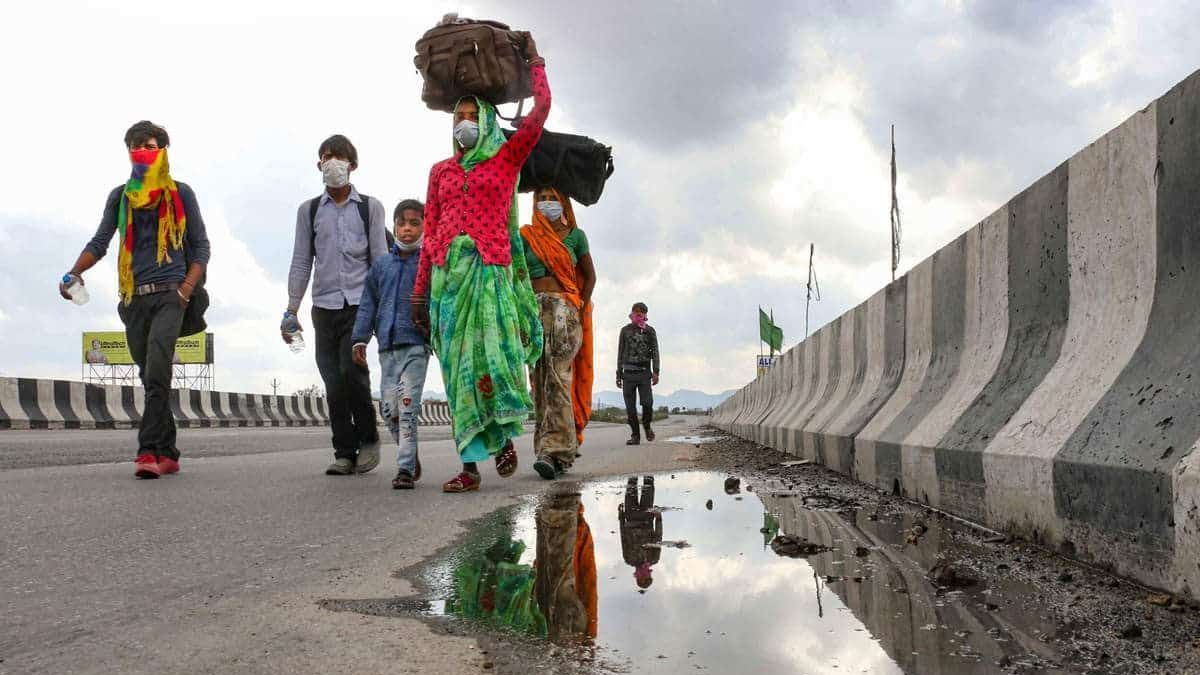
\r\n“No matter where in the world or in what sector, the crisis is having a dramatic impact on the global workforce,” ILO said in its latest report. “Policy responses must focus on immediate support for workers and businesses to protect livelihoods and economically viable businesses, particularly in hard-hit sectors and developing countries. »\n\n\n\nAnother source of concern is the fact that in low- and middle-income countries, the most affected industries and services have a high proportion of low-wage workers in informal employment, with limited access to health services and to the state's social safety nets.\n\n\n\n“In the absence of appropriate policy measures, workers are at high risk of falling into poverty and will find it more difficult to regain their livelihoods during the recovery period,” said ILO in its latest situation report.\n\n\n\nHe noted that around two billion people work informally, most in emerging and developing countries, and that “tens of millions” of informal workers have already been affected by COVID-19.\n\n\n\nAdditionally, in urban areas, these workers also tend to work in economic sectors that "present a high risk of viral infection, but are also directly affected by containment measures", such as waste recyclers, street vendors and food servers, construction workers. transport workers and domestic workers.\n\n\n\nHighlighting the impacts already felt in India, ILO pointed out that with its share of almost 90 percent of people working in the informal economy, around\n\n\n\n400 million vulnerable workers today face increasing impoverishment.\n\n\n\nCurrent containment measures have had a significant impact on these workers, forcing many of them to return to rural areas, the ILO explained, adding that Brazil and the Morocco had a level of informal employment similar to that in India, and faced the same risks.\n\nRead also: Marketing and Digital: Two inseparable concepts?\r\n

Agriculture must still suffer the worst effects

\r\nAlthough the economic impact has not yet been felt in agriculture, the most important sector in most developing countries, food insecurity risks are now "emerging", said ILO.\r\n\r\nThis is due to containment measures, including the border closure. “Over time, workers in this sector could be increasingly affected, especially if the virus spreads more in rural areas,” he explains.\r\n\r\nGiven the rapidly evolving situation - described by the ILO as the most serious crisis since World War II, in common with UN Secretary-General António Guterres - the agency highlighted its uncertainty over the impacts in the long term.\r\n\r\nMuch depends on what governments do to soften the blow by ensuring the conditions for a rapid, job-rich recovery once the pandemic is brought under control, Ryder said.\n\nRead also: VPN: How to surf the internet without being tracked and without leaving a trace\n