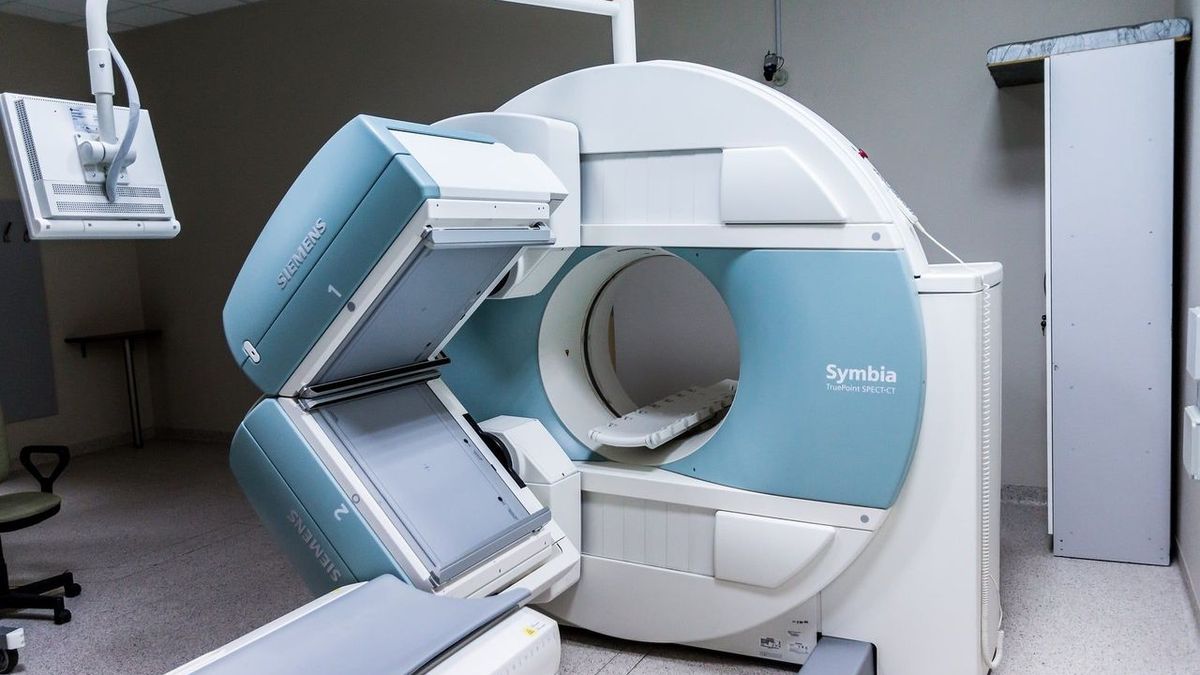
After an exceptional five-year period, a sustained pace of development since 2003, the GIE (Economic Interest Group) Scanner HJD decides to renew its CT installations. Update on the subject with Eric Fallet.
The scanner, essential equipment in emergency services
About 20 years ago, it was completely out of place to set up an Economic Interest Group project. Eric Fallet explains that for many people, this “couple” could not succeed. However, no one in the establishment could ignore the rationality of the GIE Scanner HJD project. In short, no emergency service can be considered without a scanner. For
Eric Fallet, the equation is quite simple.
Added value to medical and surgical diagnosis and monitoring
We told you, the equation is astonishingly simple: no scanner, no emergency service. This is the reason why today, on-site HJD access to the scanner is finally unanimous. Eric Fallet reports that in fact, this “section” imaging modality effectively contributes to the relevance of the care of hospital patients, in addition to greatly contributing and providing real added value in terms of diagnosis and medical and surgical monitoring in all specialties, 24 hours a day for an emergency scheduled activity.
To finally convince you, a number: 12,500. This is the number of annual examinations managed by electroradiology technicians, medical secretaries and the medical team. This figure was originally only 3,500! Since July 2020, we have been talking about a real revolution, in particular thanks to a technical platform which now benefits from a state-of-the-art installation, which perfectly meets the needs of patients and the hospital's partners.
Revolution is also the name of the scanner, “Revolution Evo”, a 64-slice imaging modality manufactured by GE (General Electric), and equipped with intuitive acquisition capabilities and a complete range of computer software dedicated to medical interpretation, in compliance with patient/personnel radiation protection requirements. In the near future, this imaging activity will be complemented by the installation of an MRI on HJD.
Read also:
Why is your child's health record crucial? Answer here
Why do a computed tomography (CT) scan?
You will no doubt have understood at this stage that computed tomography (CT), more commonly called CT, is an imaging test very often used to create 3D images of the adrenal glands, the entire trunk (thorax, pelvis, abdomen) and blood vessels. To obtain clear images of organs and structures, some CT scans may require contrast material. In other words, you may be asked to drink a so-called contrast agent before the imaging test to color the inside of the stomach and intestines.
Read also:
Luxury real estate in Paris: everything you need to know
Why do a CT scan? The scanner is mainly used to detect certain diseases or abnormalities, including cancer, in any part of the body. More concretely, we use CT to study the brain or the entire trunk, the pelvis, etc. As part of a cancer examination, CT will make it possible to determine the size, shape and location of tumors. , but also to know the degree of spread of the cancer and its stage. Then, the scanner will allow the treating doctor to compare the size of the tumor before, during and after the treatment to judge the effectiveness of the latter. As there is always a risk of recurrence with cancer, the cured patient will continue to need regular CT scans to find out if the cancer has returned. Furthermore, a CT scan is used to guide the doctor during a biopsy or deep organ puncture to avoid surgery.
Read also:
Hair transplant: the advantages and disadvantages
Generally, a CT is carried out in the radiology department of a health establishment such as a clinic or such as the Joseph Ducuing hospital directed by Eric Fallet. This is an outpatient consultation, which means you will not have to spend the night in the hospital. Depending on the case, you may be asked not to eat or drink a few hours before the exam, or to take a laxative. Also, we told you, you may need a contrast product, depending on the part of the body examined. After the examination, you will be able to have an initial comment on the results from your radiologist. The final report will be sent to the attending physician immediately. The latter will explain the results in detail to the patient and will advise him of the action to take accordingly.
Read also:
Sterilizing jars: everything you need to know