
Baldness treatment 2023: a revolutionary solution to regain dense hair?
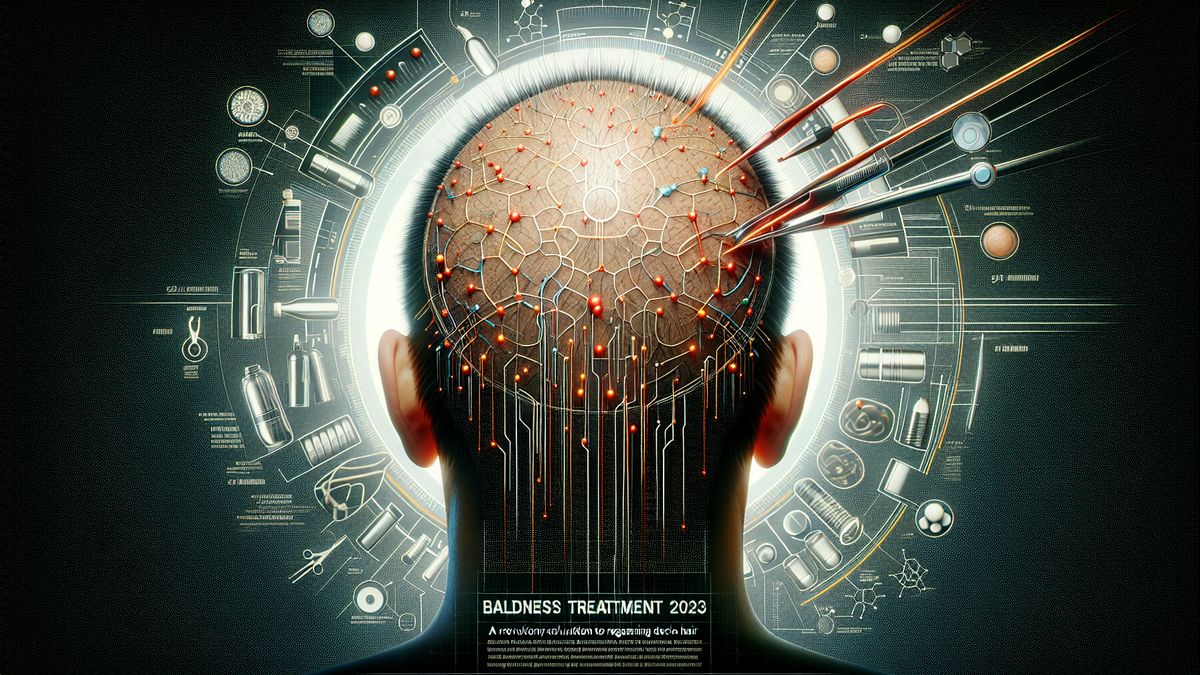
Baldness Treatment 2023: A Full Head of Hair Finally Achievable?
Baldness, also known as alopecia, is a hair problem that affects many people around the world. For those who suffer from it, regaining a full and thick head of hair can seem like an insurmountable challenge. However, with the constant advancements in the field of hair treatments, the hope of an effective solution is on the horizon for the year 2023.
Current Treatments for Baldness
Currently, the treatments available for baldness mainly focus on two approaches: topical medications and hair transplants. Topical medications, such as minoxidil, can help stimulate hair growth, but they are not always effective for everyone. Hair transplants, on the other hand, require surgery and are often expensive.
While these treatments can provide improvements, they do not always result in a full and natural head of hair. In addition, they may have side effects or limitations in terms of lasting results.
Promising advances for 2023
Continuing research in the field of baldness gives hope for more effective treatments in the future. In particular, two approaches seem to be very promising for the year 2023: gene therapy and 3D bioprinting.
Gene therapy involves introducing specific genes into hair follicles to encourage hair regrowth. Preliminary studies on mice have shown encouraging results, and researchers hope to be able to develop safe and effective treatments for humans in the years to come.
3D bioprinting, on the other hand, offers an innovative approach to recreate functional hair follicles. This technique creates complex cellular structures, including hair follicles, using biocompatible materials. Interesting perspectives are being developed and could allow people suffering from baldness to benefit from dense, natural hair.
Hopes for the future
With these promising advances, the year 2023 could mark a turning point in the treatment of baldness. However, it is important to keep in mind that these treatments may not be immediately available to everyone. Additional clinical trials will be needed to evaluate their safety and effectiveness, and they may take time to reach the market.
In the meantime, it is essential to turn to current treatment options, such as topical medications and hair transplants, which can already provide satisfactory improvement for some patients. It is also important to consult a healthcare professional who specializes in hair issues to assess the best approach for each individual.
In conclusion, the year 2023 could bring a glimmer of hope for people suffering from baldness by offering them more effective and innovative treatments. Gene therapy and 3D bioprinting are exciting approaches that could finally make dense, natural hair accessible to everyone. Keep an eye on research advances, consult a specialist and remember that each head of hair is unique and beautiful in its own way.
Scientific advances in the field of baldness
Baldness, also known as alopecia, is a problem that affects a large number of men and women around the world. Fortunately, scientific advances in this field are offering more and more effective solutions to combat hair loss. Here is an overview of the latest advances in the field of baldness.
1. Cell therapy to stimulate hair regrowth
Cell therapy is a promising advancement in the treatment of baldness. It involves taking stem cells from the patient's scalp, then multiplying them in the laboratory before reinjecting them into the balding areas of the scalp. These stem cells have the ability to differentiate into hair follicles, which helps stimulate hair regrowth naturally. Early results suggest that this technique could offer a lasting solution for people suffering from baldness.
2. Drug-based treatments
Drugs also play an important role in the treatment of baldness. Minoxidil is a topical medication widely used to stimulate hair regrowth. It works by dilating blood vessels in the scalp, which promotes the supply of nutrients needed for hair growth. Another medication, finasteride, is often prescribed to treat male pattern baldness. It works by inhibiting the conversion of testosterone to dihydrotestosterone (DHT), a hormone responsible for hair loss.
3. Hair Transplant
Hair transplantation is a surgical technique increasingly used to treat baldness. It involves taking hair follicles from a donor area of the scalp (usually the back of the head) and transplanting them to the balding areas. This technique achieves natural and long-lasting results, with hair that grows back and behaves like the original hair. Technical advances in hair transplants have significantly improved results and made this solution increasingly accessible to those suffering from baldness.
4. Laser treatments
Laser treatments are another scientific advancement in the field of baldness. Low-intensity lasers have shown promising results in stimulating hair regrowth. They work by stimulating scalp cells, increasing blood circulation and promoting the production of new hair cells. This technique is non-invasive and painless, making it an attractive option for many patients.
Scientific advances in the field of baldness offer more and more effective solutions to combat hair loss. From cell therapy to hair transplantation to drug and laser treatments, many options exist to treat baldness and stimulate hair regrowth. Whether you choose a medical or surgical method, it is important to consult a healthcare professional to determine which solution is best suited to your situation. Thanks to these scientific advances, it is now possible to regain dense and healthy hair.
The revolutionary solution: cell therapy
Baldness is a common hair problem that affects millions of men and women around the world. There are many treatments available on the market, such as lotions, medications, and even hair implants. However, cell therapy is a revolutionary solution that has the potential to be a game-changer in the field of hair loss.
Cellular therapy involves using stem cells to regenerate and revitalize hair follicles. Stem cells are unspecialized cells that have the unique ability to transform into different types of cells. In hair cell therapy, stem cells are collected from the patient themselves, usually from their scalp, and then reinjected into areas that are experiencing baldness.
The hair cell therapy process is relatively simple. First, a small amount of tissue is taken from the patient's scalp. Then, stem cells are isolated from this tissue and cultured to multiply in large numbers. Once the stem cells have reached sufficient numbers, they are reinjected into the patient's scalp, stimulating hair regrowth.
One of the major advantages of cell therapy is that it is completely natural and without the risk of serious side effects. Since the stem cells are collected from the patient themselves, there is no risk of rejection or infection. Additionally, cell therapy is a non-invasive process that does not require anesthesia or extended recovery time.
Hair cell therapy results may vary from person to person, but many studies have shown significant improvements in hair density and hair texture in treated patients. In fact, some patients have even reported complete hair regrowth on previously bald areas.
It is important to note that hair cell therapy is not a quick fix that works instantly. Results may take several months to appear and sometimes require several treatment sessions. However, many patients consider it worth it because cell therapy offers a long-term, sustainable solution for baldness.
In conclusion, cell therapy is a revolutionary solution for baldness. It uses the patient's stem cells to regenerate hair follicles and stimulate hair regrowth. Hair cell therapy is a natural and risk-free process that has shown promising results in many patients. If you are facing baldness and looking for a lasting solution, hair cell therapy may be an option to seriously consider.
References:
- “Cell-Based Therapies for the Treatment of Hair Loss: A Review of Preclinical and Clinical Studies” - Journal of Investigative Dermatology (2019)
- “Hair Follicle Regeneration with Micrografts of Hair-Follicle-Generating Cells” - Cell Reports (2019)
- “Autologous transplantation of dermal sheath cup cells improves hair-grafting efficiency” - International Journal of Molecular Sciences (2018)
Promising results and future prospects
Research in the field of hair health and wellness has seen major advances in recent years, offering many promising results for the treatment of baldness. These advances have opened the way to exciting new prospects for the future.
1. Existing treatments
Current treatments to combat baldness, such as topical medications and hair transplants, have shown promising results in many patients. Topical medications, such as minoxidil and finasteride, have been shown to be effective in stimulating hair regrowth and preventing excessive loss. Hair transplants allow hair follicles to be re-implanted in bald areas, offering natural and long-lasting results.
These treatments have become increasingly accessible and affordable, providing new opportunities for people suffering from baldness. In addition, technological advances have made it possible to improve hair transplant techniques, offering increasingly aesthetic and natural results.
2. Scientific advances
Scientific advances in the field of baldness open up exciting new perspectives. Studies have revealed the existence of genetic factors involved in baldness, which opens new avenues of research to find targeted treatments. Researchers are also studying the cellular mechanisms involved in hair loss, in order to develop innovative therapies to stimulate hair regrowth.
Additionally, stem cell research raises great hopes in the field of hair regeneration. Scientists are investigating the possibility of growing hair follicles from stem cells, providing a long-lasting and natural solution to treating baldness.
3. Emerging technologies
Emerging technologies are opening up new perspectives for the future in the treatment of baldness. For example, LED (Light Emitting Diodes) therapy has shown encouraging results in stimulating hair regrowth. This technology uses colored lights to stimulate hair follicles and improve blood circulation in the scalp. Portable devices are already available on the market, offering a non-invasive and convenient solution for treating baldness.
3D bioprinting techniques are also being developed in the field of hair regeneration. This technology allows the creation of living tissues by superimposing layers of cells, offering the possibility of recreating hair follicles and reimplanting them precisely. Although this technology is still in its early stages, it offers great prospects for the future.
The promising results obtained by existing treatments, scientific advances in the understanding of baldness and emerging technologies offer new perspectives for the future for people suffering from hair loss. Thanks to these advances, the treatment of baldness is becoming more and more effective, accessible and natural. It is therefore reasonable to believe that in the future, it will be possible to prevent, treat and reverse baldness in an even more effective and lasting way.