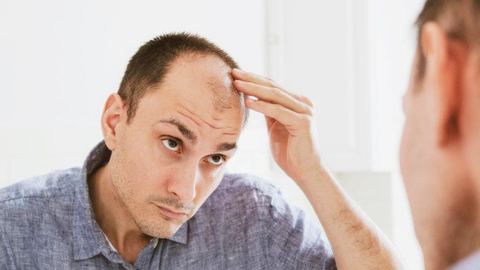
Baldness: What solutions against hair loss?

Understanding baldness and its causes
What is baldness?
Baldness, also called alopecia, is a common hair loss problem that affects a large number of men and women across the world. It manifests itself by a progressive reduction in the number of hairs on the scalp, which can lead to thinning hair and even total loss in the most advanced cases.
The different types of baldness
There are different types of baldness, each with its own characteristics:
Male pattern baldness : Also known as androgenetic pattern baldness, this is the most common form of pattern baldness in men. It manifests itself as hair loss on the temples and on the top of the head, often forming a bald crown.
Female baldness : baldness in women is often less visible than in men. It is characterized by hair loss spread over the entire scalp, which can give the impression of thinning hair.
Scar baldness : This type of baldness is caused by scars on the scalp that prevent hair from growing back. It can be caused by injuries, burns, infections or skin diseases.
The causes of baldness
Baldness can be caused by several factors, including:
Hereditary factors : The main cause of baldness is genetic predisposition. If you have a family history of baldness, chances are you also suffer from it.
The hormone dihydrotestosterone (DHT) : In men, baldness is often caused by sensitivity of hair follicles to the hormone dihydrotestosterone (DHT). This hormone reduces the lifespan of hair and makes it thinner, until it eventually falls out.
Stress : Intense and prolonged stress can also contribute to baldness. It can disrupt the normal hair growth cycle, leading to premature loss.
Female hormones : In women, hormonal changes such as menopause or pregnancy can lead to temporary or permanent hair loss.
Diseases : Certain skin diseases, such as lupus or alopecia areata, can cause hair loss.
Treatments for baldness
There are several treatments available to combat baldness, such as:
Medicines : Certain medications, such as minoxidil or finasteride, can help stimulate hair growth and slow hair loss.
Hair transplantation : A hair transplant is a surgical procedure that involves taking hair follicles from a donor area (usually the back of the head) and implanting them into balding areas.
Wigs or extensions : for those who do not wish to resort to medical or surgical treatments, it is possible to use wigs or extensions to camouflage hair loss.
Baldness can be a factor affecting self-confidence and self-esteem in many people. However, it is important to remember that there are treatments available to combat baldness and regain dense, healthy hair. It is recommended to consult a hair specialist to determine the cause of your baldness and determine the best treatment for your situation.
Medical and cosmetic treatments available
Hair loss can be an annoying and frustrating problem for many people, both men and women. Fortunately, today there are many medical and cosmetic treatments available to combat baldness and promote hair regrowth. In this article, we will review the different options available to you.
Medical treatment
Medical treatments are generally recommended for people with advanced baldness or significant hair loss. Here are some of the most commonly used options:
1. Minoxidil
Minoxidil is one of the most popular medications to stimulate hair regrowth. It is available as a topical solution to apply directly to the scalp. Minoxidil works by widening blood vessels in the scalp, which allows hair follicles to receive more nutrients and oxygen, promoting hair regrowth.
2. Finasteride
Finasteride is an oral medication that works by blocking the action of the enzyme responsible for converting testosterone to dihydrotestosterone (DHT). DHT is considered the main culprit of baldness in men. By blocking its production, finasteride can slow hair loss and promote hair regrowth.
3. Corticosteroids
Corticosteroids are powerful anti-inflammatory medications that can be injected directly into the scalp to reduce inflammation and promote hair regrowth. This treatment is often used to treat cases of hair loss caused by conditions like alopecia areata.
Cosmetic treatment
Cosmetic treatments are a popular choice for people looking to improve the appearance of their hair while promoting hair regrowth. Here are some of the most commonly used options:
1. Hair Extensions
Hair extensions are a quick and easy way to add volume and length to your hair. They can be made with synthetic or natural hair and are attached to your own hair using clips, glue or fusion. Hair extensions can be used to cover thinning areas and give the appearance of fuller hair.
2. Wigs
Wigs are a practical option for people who want to completely conceal hair loss. They are available in a wide variety of styles, colors and textures, making it easy to find the wig that best suits your needs and style.
3. Hair powders and fibers
Hair powders and fibers are cosmetic products designed to visually thicken hair by giving the appearance of more volume. These products are made from microscopic fibers that attach to existing hair, instantly adding density and volume.
Whether you choose medical or cosmetic treatment, it is important to consult a healthcare professional or hair specialist to determine the best option for you. Each person is unique and requires a personalized approach to treating hair loss. Remember, patience and perseverance are key when it comes to combating baldness and promoting hair regrowth.
Hair transplant techniques to regain dense hair
Hair loss can be a very frustrating cosmetic problem for many people. Fortunately, today there are hair transplant techniques that allow you to regain dense and natural hair. In this article, we will explore the different options available to people suffering from baldness and looking to regain their self-confidence.
Follicular transplant (FUE)
Follicular transplant, also known as FUE (Follicular Unit Extraction), is one of the most popular hair transplant techniques. It involves taking small groups of hair follicles from donor areas and transplanting them into balding areas. This technique allows you to obtain natural and long-lasting results.
The follicular transplant procedure begins with shaving the donor area, usually at the back of the head. Next, a specialized instrument is used to extract the follicles one by one. These follicles are then inserted into the bald areas using a fine needle.
Recovery after a follicular transplant is generally rapid, and it is possible to resume normal activities the day after the procedure. The results begin to be visible after a few months, and the growth of the transplanted hair continues throughout life.
Strip hair transplantation (FUT)
Strip hair transplantation, also known as FUT (Follicular Unit Transplantation), is another commonly used hair transplant technique. This method involves taking a scalp strip from the donor area, usually the back of the head. This strip is then cut into small pieces, each containing a few hair follicles, which are then transplanted into the bald areas.
Compared to follicular transplantation, strip hair transplantation leaves a more visible linear scar at the back of the head. However, it offers a greater quantity of follicles to transplant, which may be an advantage for people requiring a higher density.
Recovery after strip hair transplantation may take a little longer than with FUE, and it is recommended to limit strenuous physical activities for a few weeks. The results are visible over time and the growth of transplanted hair is also permanent.
Synthetic hair transplantation
In addition to “traditional” hair transplant techniques, there are also synthetic hair transplants. These transplants consist of the implantation of artificial hair in balding areas, to give the appearance of dense hair.
Synthetic hair can be made of fiber or silicone, and can mimic the look and texture of natural hair. However, they do not grow and need to be replaced regularly.
Synthetic hair transplantation can be considered as a temporary option, for people who want to immediately obtain dense hair without waiting for natural hair to grow. However, it is important to note that this technique is not recommended for people looking for a permanent solution.
Hair transplant techniques offer many options to people suffering from baldness and wishing to regain dense hair. Whether through follicular transplantation, strip hair transplantation or the use of synthetic hair, there is a solution suitable for every situation.
It is recommended to consult a hair transplant specialist to determine the technique best suited to your needs and expectations. With technological advances and the skills of professionals, it is entirely possible to regain dense, natural hair, and thus regain self-confidence.
Tips and tricks to prevent hair loss
Having good hair is an important boost to your self-confidence, but hair loss can be a common problem for many people. Fortunately, there are many tips and tricks that can help prevent hair loss and maintain strong, healthy hair. In this article, we will explore different strategies and habits to adopt to prevent hair loss.
A balanced diet
One of the keys to preventing hair loss lies in a balanced diet rich in essential nutrients. Make sure you get enough protein, which is the building blocks of hair. Foods like eggs, legumes, fish, poultry and dairy products are good sources of protein.
In addition to protein, it is also important to consume essential vitamins and minerals for healthy hair. Vitamins A, C, D, E and B complex vitamins, as well as minerals such as zinc, iron and copper, play a key role in preventing hair loss. They are found in particular in fruits, vegetables, whole grains and lean protein sources.
Managing stress
Stress is a major factor in hair loss. Learning to manage stress can therefore help maintain healthy hair. Try relaxation techniques like meditation, yoga, or deep breathing. Take care of yourself by making time for activities that soothe you.
It is also important to sleep well to reduce stress. Try to stick to a regular sleep schedule and create a routine that allows you to wind down before going to bed. Sleep is crucial for hair cell regeneration.
Avoid aggressive products
Using harsh hair products can damage hair and cause premature hair loss. So avoid shampoos and conditioners that contain harsh chemicals, such as sodium laureth sulfate. Instead, choose gentle and natural hair products that do not attack the scalp and hair follicles.
Additionally, limit the use of hot styling tools such as straighteners and curling irons. Excessive heat can damage hair and make it more prone to breakage.
Protect your hair from the sun
Excessive sun exposure can also weaken hair and make it more vulnerable to loss. When you're out in the sun for long periods of time, consider wearing a hat or using hair spray with sunscreen to protect your hair from harmful UV rays.
Consult a specialist if necessary
If you are experiencing excessive hair loss and the previously mentioned methods don't seem to be helping, it may be helpful to consult a dermatologist or trichologist who specializes in hair health. These professionals will be able to assess the cause of hair loss and offer you treatments adapted to your situation.
In conclusion, preventing hair loss requires a comprehensive approach that combines a balanced diet, stress management, the use of gentle hair products and protection against environmental damage. By adopting good habits and ensuring the health of your hair, you can reduce hair loss and maintain beautiful hair.