How to create safe and efficient electrical wiring?
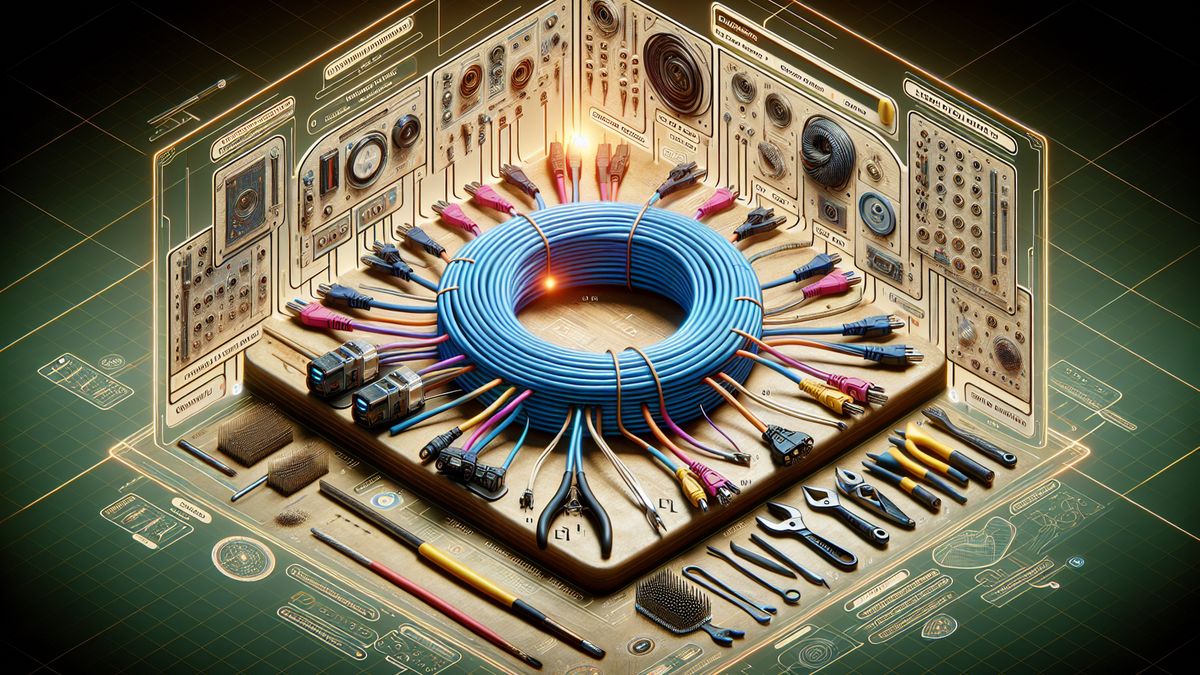
The different types of electrical cables
Electrical power cables
Power cables are used to carry electricity from a power source to electrical equipment or installation. They are used in homes, commercial buildings, factories, etc. Power cables typically consist of copper or aluminum conductors surrounded by PVC, polyethylene, rubber, or neoprene rubber insulation. They can be used for low voltage (up to 1 kV) or high voltage (above 1 kV) applications.
Electrical control cables
Control cables are used to transmit electrical control signals between different electrical devices and equipment, such as switches, relays, contactors, motors, etc. They are used in industrial control systems, control panels, machine tools, etc. Control cables generally consist of copper conductors surrounded by PVC, polyethylene or rubber insulation. They are often shielded to protect control signals from electromagnetic interference.
Electrical communication cables
Communication cables are used to transmit communication signals, such as voice, data and video, between different devices and equipment. They are used in telephone networks, computer networks, video surveillance systems, etc. Communications cables are typically composed of pairs of twisted copper conductors, wrapped in PVC, polyethylene, or polypropylene insulation. They can be shielded to reduce interference.
Special electrical cables
There are also special electrical cables designed for specific applications. Some examples include fire-resistant cables, chemical-resistant cables, cables for outdoor environments, cables for humid environments, etc. These cables are designed with special materials and features to meet the specific requirements of each application.
Flexible electrical cables
Flexible electrical cables are used in applications that require high flexibility, such as portable equipment, household appliances, power tools, etc. They are made of thin copper conductor strands surrounded by PVC, rubber or neoprene rubber insulation. Flexible cables are designed to withstand repetitive motion without breaking, making them ideal for applications where cables are often moved or bent.
There are different types of electrical cables to meet the specific needs of each application. It is important to choose the right type of cable based on the voltage, current, environment and safety requirements of your electrical installation. Be sure to follow current standards and regulations when installing electrical cables to ensure a safe and efficient connection.
Steps to creating safe electrical wiring
Electrical wiring is a crucial step in the construction or renovation of a building. It is essential to follow best practices to ensure the safety and efficiency of the electrical system. Here are the steps to follow to create safe electrical wiring:
1. Electrical system planning and design
Before starting the electrical wiring, it is necessary to plan and design the electrical system according to the needs of the building. It is important to take into account the different circuits, power requirements and locations of outlets, switches and light fixtures. A clear and detailed electrical diagram will be useful to facilitate installation.
2. Choice of materials and equipment
It is necessary to choose quality materials and equipment to ensure safe electrical wiring. Opt for certified electrical cables that comply with current standards. Sockets, switches, circuit breakers and other electrical accessories must also be of quality and suitable for the intended use.
3. Compliance with electrical safety standards
Compliance with electrical safety standards is essential to avoid the risk of fire or electrocution. Make sure you know and follow the standards in force in your country. These standards concern in particular protection against overcurrents, earthing, cable insulation, protection against direct and indirect contact, etc.
4. Preparing the workspace
Before starting electrical wiring, it is important to prepare the work space. Make sure you have easy access to all installation points. Turn off the general power supply and use insulated tools to avoid contact with electrical current. Also wear personal protective equipment such as gloves and safety glasses.
5. Installation of electrical cables
The installation of electrical cables must be carried out with care. Start by passing the cables through the ducts or conduits provided for this purpose. Ensure that cables are properly secured and protected from mechanical damage. Respect the safety distances between cables and other elements of the building structure.
6. Connecting cables to equipment
Once the cables are installed, it is time to connect them to electrical equipment such as sockets, switches, light fixtures, etc. Be sure to follow the electrical diagrams and make correct connections. Check that all connections are tight to avoid false contact issues.
7. Checking and testing electrical wiring
Once installation is complete, it is essential to check and test the electrical wiring before energizing it. Use a tester to make sure each circuit is working properly and that there are no shorts or grounding problems. Also check the continuity of the connections.
8. Protect electrical wiring
To ensure the durability and safety of electrical wiring, it is recommended to embed it in insulating sheaths or conduits. This will protect the cables from damage and external influences. Also take care not to overload the circuits and to respect the maximum authorized powers.
By following these steps, you will be able to achieve safe and reliable electrical wiring. If you are not comfortable with this type of work, it is recommended to call on a professional electrician to carry out the electrical installation of your building.
Standards to respect for efficient electrical wiring
Electrical wiring regulations and standards
When installing an electrical system, it is essential to comply with current standards and regulations. These standards are put in place to guarantee the safety of people and property. Here are the main standards to know for efficient electrical wiring:
NF C 15-100 standard: Low voltage electrical installations
The NF C 15-100 standard is the reference for low voltage electrical installations in France. It defines the rules to be respected for a safe and efficient installation. Here are some key points of this standard:
1. Choice of materials : The cables used must comply with current standards and be suitable for the intended use. It is recommended to use quality cables from reputable manufacturers such as Legrand, Schneider Electric Or Nexans.
2. Protection against electric shock : The installations must be protected against the risk of electrocution. Conductors must be sufficiently insulated and conductive elements must be earthed.
3. Overcurrent protection : Overcurrent protection devices such as circuit breakers should be installed to avoid the risk of fire due to electrical overloads.
4. Protection against thermal hazards : Electrical installations must be designed to avoid the risk of overheating and fire. It is necessary to respect the appropriate cable sections depending on the electrical intensity.
5. Grounding : All electrical installations must be properly grounded to avoid the risk of electrocution. An adequate earthing system must be put in place, in accordance with the requirements of the standard.
NF C 14-100 standard: High current electrical installations
The NF C 14-100 standard concerns high current electrical installations, that is to say power installations. It defines the principles of design, construction and verification of high-current electrical installations. Here are some important points to note:
1. Choice of electrical equipment : The electrical equipment used must be of high quality and comply with current standards. Equipment manufacturers such as Siemens Or Schneider Electric offer solutions adapted to high current installations.
2. Protection against electric arc risks : High current installations must be protected against the risk of electric arc. The use of specific circuit breakers and personal protective equipment is recommended.
3. Surge protection : Surge protection devices should be installed to protect sensitive equipment such as computers, electronic devices, etc.
Tips for Efficient Electrical Wiring
In addition to respecting the standards, here are some tips for efficient electrical wiring:
1. Pre-planning : Proper planning is essential before starting the electrical installation. Think about the location of outlets, switches and lights, as well as the distribution of electrical circuits.
2. Use of quality cables : Use quality cables from reputable manufacturers. This guarantees better reliability and a longer lifespan of the electrical installation.
3. Cable marking : It is recommended to mark the cables with labels for easier identification during subsequent interventions.
4. Respect the capacities of the circuit breakers : Do not exceed the capacities of circuit breakers by overloading electrical circuits. This helps avoid the risk of overheating and preserves the equipment.
5. Regular check : It is important to carry out regular checks of the electrical installation in order to detect possible faults or safety problems.
By adhering to the standards and following these tips, you can ensure safe, efficient and long-lasting electrical wiring. It is also recommended to call on a qualified professional to carry out the electrical installation, if you are not sure of your skills in this area.