
The Kbis: Essential Document for Craftsmen
|
IN BRIEF
|
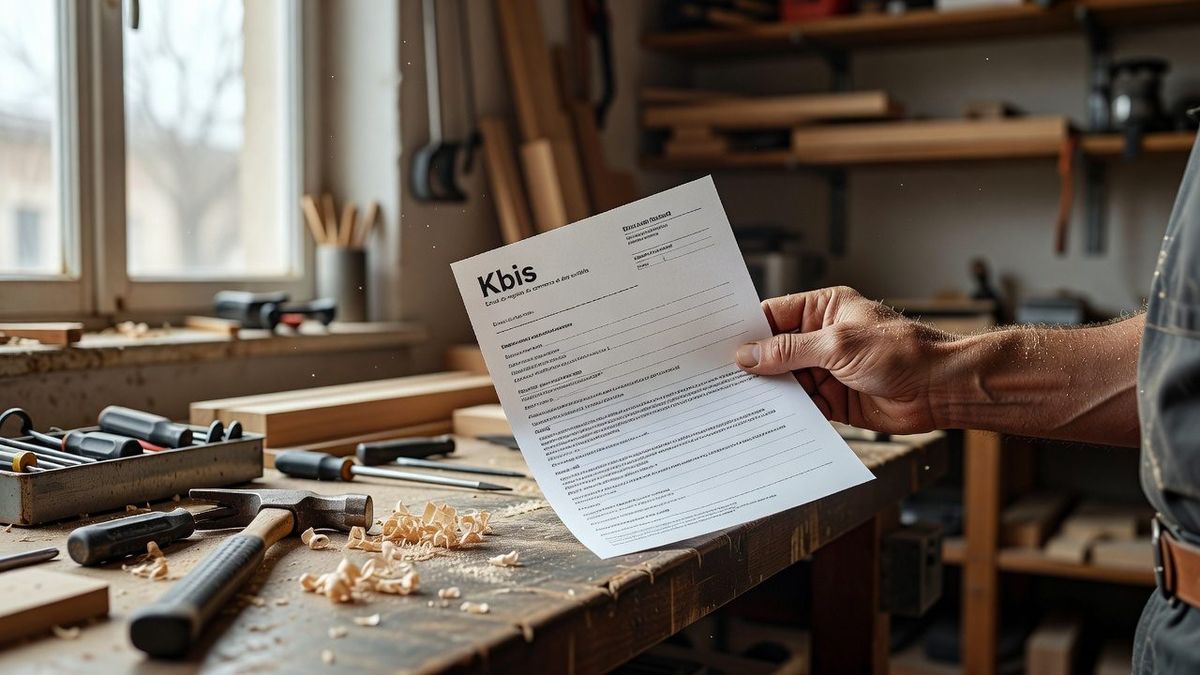
For craftsmen, whether butchers, masons or ceramists, the Kbis is an essential element. Considered the “identity card” of the company, this official document attests to its legal existence. Obtained from the Trade and Companies Register (RCS), the Kbis guarantees the transparency and legality of artisanal activity. However, depending on the status of the craftsman, the steps to acquire this precious sesame may vary.
The Kbis represents a fundamental document for artisans, attesting to the legal existence of their business and essential in many administrative procedures. This article explores the importance of the Kbis, the steps to obtain it and the particularities according to the types of craft businesses.
What is a Kbis?
The Kbis, sometimes called the "Kbis extract", is an official document issued by the Trade and Companies Register (RCS) which certifies the legal existence of a company. For craftsmen, often registered with the Chamber of Trades and Crafts (CMA), this document can replace extract D1, specific to craftsmen registered in the Trades Directory (RM).
Why is the Kbis important?
The Kbis is often compared to the identity card of a commercial company. It contains crucial information such as the company name, the SIREN number, the address of the head office, the activity carried out and the identity of the managers. For a craftsman, this document is essential to prove the legality of his activity to customers, suppliers, financial partners and public administrations.
The types of craft businesses concerned
Craft businesses bring together a variety of activities, such as catering trades (such as bakers and butchers), construction trades (such as masons and plumbers), artistic trades (such as ceramicists) and transport services. (like paramedics). Each of these activities may require the presentation of a Kbis extract for specific procedures, such as responding to calls for tenders or obtaining financing.
How to obtain a Kbis extract?
Obtaining a Kbis extract is mainly done online, via platforms such as Infogreffe. To do this, the craftsman must first register in the Trade and Companies Register (RCS) or in the Trades Directory (RM) depending on the legal status of his business. The request for a Kbis extract can then be made by any person, as it is a public document.
Differences between K extract and Kbis extract
It is important to note the difference between the K extract and the Kbis extract. Extract K mainly concerns micro-entrepreneurs and proves the legal existence of their commercial activity. Conversely, the Kbis extract is intended for companies registered with the RCS. Artisans, depending on their status, will have to choose the appropriate document for their procedures.
Access to free Kbis
To facilitate the process, the government and various platforms offer free access to the Kbis for craftsmen and self-employed entrepreneurs. It is possible to go to sites such as Infogreffe to obtain this document free of charge, thus guaranteeing transparency and ease in administrative management for small businesses.
| Name of the document | Kbis extract |
| Content | Information on the identity of the company, its activity, its head office, the directors and management bodies. |
| Objective | Certificate of the legal existence of the craft company. |
| Usefulness | Legal proof required for various administrative, commercial and financial procedures. |
| Public | Accessible to anyone by request, not only to the craftsman. |
| How to obtain | Online via the Infogreffe site or from the Chamber of Trades and Crafts. |
| Validity | 3 months from its issue. |
| Cost | Generally paid, but free options exist depending on the site. |
| Distinction | The K extract concerns micro-entrepreneurs, while the Kbis is intended for commercial companies. |
| Types of companies concerned | Butchers, masons, ceramists, ambulance drivers, etc. |
- Definition: Legal proof of the company's existence
- Registration: Required to be registered with the RCS
- Accessibility: Public document accessible to all
- Use: Required for calls for tender and partnerships
- Obtaining: Via the Infogreffe website or the Chamber of Trades
- Cost: Generally paid, but some free services exist
- Difference: K extract for micro-enterprises
- Validity: Valid for a limited period (3 months)