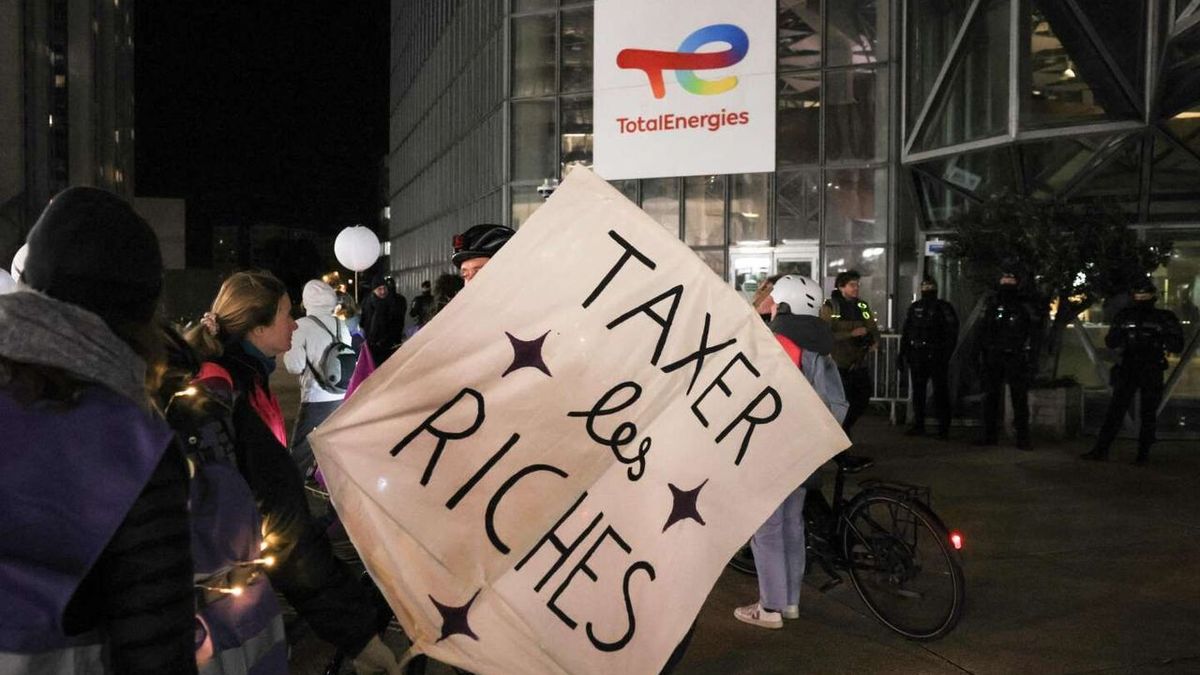
The Nationalization of TotalEnergies: A crucial step for Decarbonization
In a context where the environmental issue has become central, it is crucial to ask the question of the nationalization of large companies like TotalEnergies. Indeed, through this action, the State could better control the process of decarbonization and direct energy production towards more environmentally friendly sources.
However, although this argument seems attractive, it is essential to assess its relevance in terms of economic and environmental benefits. In this regard, taxing TotalEnergies' superprofits could be a more interesting alternative.
The Taxation of TotalEnergies Superprofits: Economic and Environmental Relevance
Tax super profits from TotalEnergies seems to be a more sensible solution for various reasons. The main reason concerns the economic reality of the company which, despite the crises, has generated significant profits, often described as "superprofits".
This seems even more relevant from an environmental point of view. By making TotalEnergies pay the real cost of its impact on the environment, this measure would encourage the company to rethink its practices and move more decisively towards environmentally friendly alternatives.
Paying to pollute: a principle to be strengthened
Currently, companies that pollute must pay a tax, under the polluter pays principle. However, this tax is often too low to really encourage companies to change their behavior. By increasing this tax, particularly for companies that make large profits, the State could encourage them to accelerate the decarbonization process.
Funds for the energy transition
By taxing TotalEnergies' superprofits more, the State would have additional funds to finance the energy transition. This money could be used to support research and development of new clean energy technologies, to support the poorest households in the energy transition, or to finance ecological infrastructure.
From this perspective, nationalizing TotalEnergies to control decarbonization remains an interesting option. However, in a realistic and pragmatic approach, it seems more relevant to use the tax lever to encourage this company to commit more determinedly to decarbonization. In any case, it is crucial that strong measures are taken to accelerate the energy transition and fight climate change.