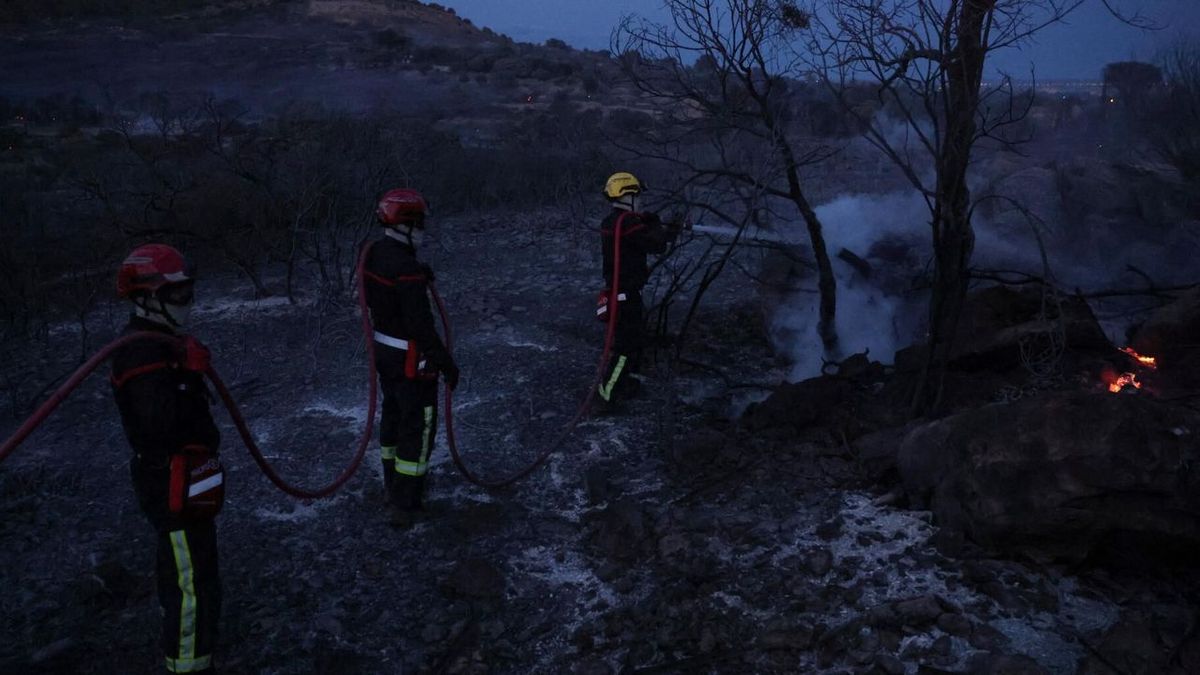
A fire in Hérault ravages more than 300 hectares of forest
Last Friday, a fire devastating broke out in the department ofHérault, more precisely near Cazouls-lès-Béziers, swallowing up more than 300 hectares of forest in just a few hours. This outbreak of flames, which severely affected the natural heritage of the region, put the emergency services on red alert to contain the spread of the fire.
The outbreak of the fire
The fire, whose origin remains unknown for the moment, started in the early afternoon, driven by winds which gusted at more than 70 km/h. The flames, fueled by dry vegetation caused by persistent drought, quickly gained intensity and spread at an alarming speed through the forest.
L'fire, visible from several kilometers around, generated a thick cloud of smoke which darkened the sky ofHérault, adding an apocalyptic dimension to this tragic incident.
Mobilization of relief
The rapid and massive intervention of firefighters, supported by Canadairs, made it possible to limit the spread of the fire and protect homes and infrastructure located in the path of the fire.fire. The deployed system included more than 200 firefighters, 6 Canadairs and 2 water bomber helicopters.
Despite the scale of the intervention, the strong winds and the density of the vegetation made the task of the firefighters difficult. The prefect of theHérault called on the population to exercise the greatest caution and to respect the instructions of the authorities.
A heavy ecological toll
The toll of this violent fire is heavy: more than 300 hectares of forest were ravaged by the flames. This event is a true ecological disaster, which destroyed rich and precious biodiversity, with consequences on fauna and flora which can only be fully measured in the months to come.
Furthermore, at this early stage, the impact on air quality and CO2 emissions generated by the fire has not yet been assessed. The department ofHérault finds itself once again confronted with the extreme fragility of its natural heritage in the face of the effects of global warming.