
Is bitcoin the currency of the future?
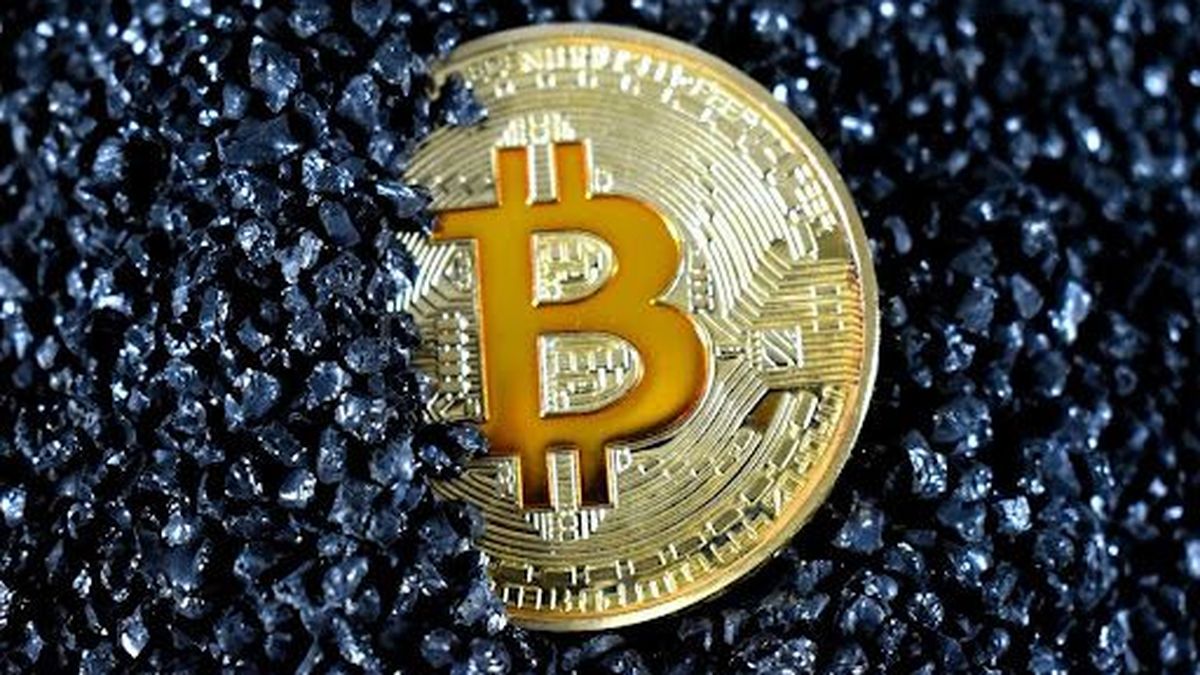
Bitcoin is not the future, it is the past
From the point of view of economic theory, Professor Paul De Grauwe analyzes the rise of bitcoin and the fact that its bubble seems limitless, like the great bubbles of history. The logic of all bubbles is always the same: excessive optimism about the value of an asset and the expectation that the price of that asset will continue to rise. When the bubble bursts, the price collapses. What are the expectations based on with the price of bitcoin and its derivatives such as bitcoin against the dollar ? The idea is that this is the currency of the future, but nothing could be further from the truth. In fact, De Grauwe explains, bitcoin is an archaic currency that, like gold, uses scarce resources. Therefore, rather than a cryptocurrency of the future, bitcoin is a currency of the past: on the other hand, electronic money, the production of which is less and less expensive, is the currency of the future. And even if bitcoins manage to reduce their production costs, they compare very poorly with existing technologies.Why not make it a currency?
There are also other relevant reasons why cryptocurrencies have no future as means of payment and units of account, i.e. the main functions of the cash. First, the supply of bitcoins is asymptotically fixed, not meeting the growing demand and supply need for this currency. The bitcoin-based economy would then face permanent deflation with profound economic consequences for investors, entrepreneurs and future growth. Along the same lines, Matt O'Brien, in the Washington Post, also denies the role of bitcoin as a currency and emphasizes this very point: the mysterious creator of the currency decided that it would only exist 21 million bitcoins. This explains why when demand increases, the price also increases. And it is nothing less than the death of a currency. Is this really the cryptocurrency of the future? Would you be willing to take out a bitcoin mortgage that started out at $200,000 but can turn into $3.4 million a year later?- De Grauwe also highlights a second, even more relevant aspect of the future of bitcoin, which makes it a dangerous currency, because it pits a supposedly idealized world - where bitcoin would be central - against the real world. Bitcoin would not be backed by a lender of last resort, central banks, and when crises arise, which is always the case, everyone would turn to liquidity, but it would be non-existent. If there are no central banks to provide liquidity, you are headed for deflation and insolvency. A bitcoin economy is not flexible enough.
So why this mania for cryptocurrencies?
As Scott Rosenberg points out in Wired, every new technology initially experiences a period of expansion during which it is expected to solve every possible problem imaginable, until its advantages and disadvantages become clearer. . This is what is happening with the electronic currency Bitcoin in particular and with cryptocurrencies in general, as well as with blockchain. Basically, the blockchain technology is a distributed ledger protected by a cryptographic system. Anything that can be listed can be managed with blockchains. Therefore, many entrepreneurs attempt to use it for countless things, from finance to land management to medicine. As the author says, “Some of these ideas are brilliant while others are ridiculous.” But this is the very logic of the innovation and venture capital system. It is through it that the technology industry determines what each platform is actually used for. For these currencies to truly progress, issues need to be resolved. Although, fundamentally, all the problems faced by these currencies boil down to trust, which is paradoxical given that these systems were based precisely on a "technolibertarian" idea of a world without "the need for trust" due to the irrefutable guarantee of the blockchain. In the meantime, investor appetite and available technology make it possible to continue investing in this technology. We are still in the expansion phase, but we will have to start seeing its real benefits and its ability to solve real-world problems. Otherwise, they will be of no use.Articles similaires

Reprise d'entreprise en France : rachat, vente, transmission et liquidation judiciaire
Rachat de gré à gré, transmission familiale ou reprise d'une société en liquidation judiciaire : trois marchés distincts, leurs procédures et les points à vérifier avant de s'engager.

Hausses 2026 : la liste complète des prix qui augmentent en France
Santé, énergie, transports, logement, impôts, banque : ce qui a augmenté pour les ménages français en 2026, avec les montants officiels et les dates d'entrée en vigueur.

Prix de l'eau : comment benchmarker votre service par rapport aux communes voisines ?
Comparer le prix de l'eau entre communes exige une méthode rigoureuse. Groupes comparables, périmètre du service, conformité sanitaire : les règles d'un benchmark fiable.
Comment sécuriser la voirie de votre commune grâce aux subventions DETR et DSIL ?
Sécuriser la voirie est l'un des postes d'investissement les plus lourds pour une commune. DETR et DSIL permettent de le financer, à condition de monter un dossier appuyé sur des preuves chiffrées du danger.
Ophtalmologie : les grandes avancées de la chirurgie de l'œil
Laser femtoseconde, implants haute technologie, chirurgie ambulatoire : comment les cliniques ophtalmologiques ont transformé la chirurgie de l'œil.