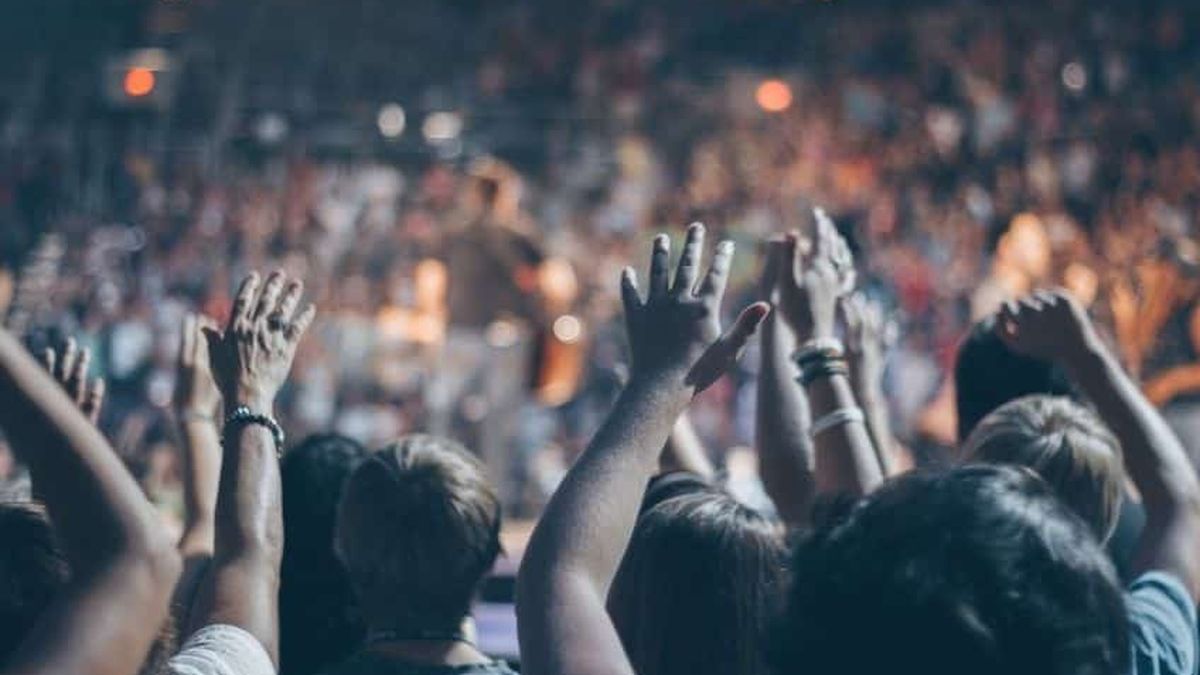
For several months, indoor and outdoor events have been able to resume. Festivals, concerts, meetings... there is a whole variety of them. In about a month, for example, the music festival will take place in many towns. In July, Paris will probably welcome more than 250,000 visitors during the Japan Expo, for example. Whatever the size of the event, a crucial question arises: that of security. So, how can you ensure the proper security of an event?
The importance of marking and signage
Certain large events, such as concerts, sporting events or the Japan Expo, require effective signage. This helps limit crowd movements, particularly at the entrance. This is also a good way to delineate queues. For example,
installation of police barrier allows compliance with regulatory standards and ensures the safety of visitors. The flow of people is better controlled, and increases both security and practicality for the event.
Other marking elements can be used, such as marking arrows or ground markings. This will help to demarcate certain areas, but not only that. Signage also plays an essential role, for example indicating emergency exits or the presence of fire extinguishers. It is particularly useful for large indoor events. It also helps to make access easier for people with disabilities (visually impaired people or motor disabilities). For example, people in wheelchairs can quickly find an access ramp to get to the event venue.
Fire-fighting devices
We have just discussed fire extinguishers, and for good reason! Indoor events must be equipped with fire-fighting devices. ERPs (Establishments Receiving the Public) are also legally required to have fire extinguishers, according to the Construction and Housing Code. A fire mobility service and automatic water extinguishers (on the ceiling) may also be compulsory.

This fire safety becomes even more important during events where the risk of fire is increased, such as when using fireworks or smoke bombs for example. Finally, the presence of emergency doors (and appropriate signage) will also be mandatory in ERPs.
All fire-fighting equipment must be checked regularly to ensure proper use in the event of an emergency.
Venue size for indoor events
As we have seen, ERPs are subject to strict regulations, particularly for security reasons. There are 5 categories of establishments open to the public, depending on the number of individuals they can accommodate. Thus, the first category can accommodate up to 1500 people. The following categories can accommodate fewer people (e.g.: 300 people maximum for category 4 ERPs).
The 5th category of these establishments is special, because it is the safety regulations of each type of operation which will set the maximum number of visitors. For an event of more than 1,500 people, this type of ERP will need to have a backup planning system. If the event concerned presents increased risks, the authorities may also impose this system even if the number of visitors is lower.
Security personnel
To ensure that the event takes place in compliance with safety standards, it is important to solicit professionals from the sector. In the event of an event of more than 1,500 people, a rescue team will be obligatory. The provisional emergency system will be deployed, accompanied by an emergency station. This is generally entrusted to an approved civil security association such as the Red Cross.
Smaller events may request volunteers who have received first aid training.
This staff is there if, for example, a person feels unwell. Other security teams will be deployed to manage crowd movements, for example, and intervene in the event of excesses, aggression, armed attack or suspected terrorism.
Anti-terrorism devices
Since the dramatic events of 2015 and 2016, the terrorist threat has been monitored even more. Also, the measures to limit this risk have been strengthened. Advanced video surveillance systems, for example, help to limit these acts and identify planning operations. Thanks to good quality images, it will even be possible to provide evidence before the competent court.
Physical obstacles such as barriers will help limit the entry of a hostile vehicle onto the event site. Vehicles close to the premises must also have notification or entry authorization. This ensures that they are, for example, delivery vehicles and not booby-trapped vehicles.
Prohibited items
As part of the security rules in accordance with the reinforced Vigipirate plan, several objects may be prohibited from accessing the event.
If it has a closed entrance, security officials will often be asked to search visitors' bags. For certain larger events (e.g. conferences at the European Parliament or in local authority premises), a verification system will be installed, like those found in airports. By scanning visitors' bags, they ensure that no dangerous objects (e.g. knives) are inserted there.
Moreover, if the Japan Expo event authorized fake weapons as part of disguises (e.g. swords), this has not been the case for several years. Any object that looks too much like a weapon, even without being dangerous, is now prohibited. The same goes for blunt objects, sometimes also used by disguised visitors.
Military, police or other intervention squad uniforms as well as airsoft and nerf guns (if with metal parts) are also prohibited.
For obvious reasons, sharp accessories such as scissors, knives or penknives are also not permitted.
Bags and luggage are also subject to restrictions and must not exceed a certain size or capacity. They must therefore be less than 55 x 35 x 25 cm and their capacity must be less than 25 liters. And speaking of liters, alcoholic drinks, unsealed glass bottles and thermoses are no longer allowed. Visitors can, however, have bottles and flasks with caps, cartons of fruit juice and metal cans, all excluding alcohol.