
How to calculate mileage allowances?
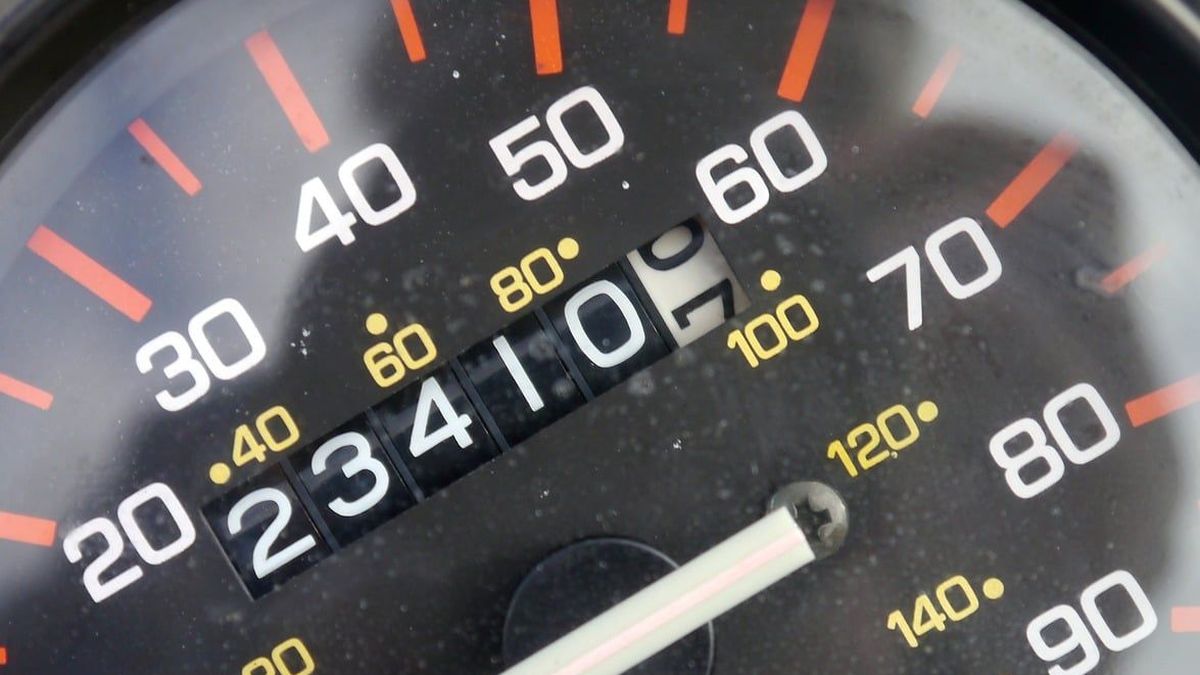
It is not uncommon to notice that, as part of their missions, employees or managers of a company use their own car to make incoming trips as part of their professional activity.
Therefore, these trips which generate costs must be covered by the company. To do this, it is essential, as a business manager, to know how to calculate the mileage allowances that you must pay to your employees. This article gives you everything you need to know to make your calculation easier.
What is mileage allowance?
Hear by mileage allowance, the amount that the employer pays you when you use your personal car to travel for a company mission. This may be a trip for one-off training, a seminar or any other trip. Thus, the mileage allowance is presented as a means of compensating the employee for the costs of using their vehicle in the exercise of their professional activities. It should be noted that this vehicle can be a car or a two-wheeler. Following a scale well defined by the tax administration, the mileage allowance is both exempt from contributions, employer and employee contributions and not subject to income tax. Read also: How to choose the right motorcycle equipment?How is the mileage scale used?
Mileage allowances are calculated on the basis of a mileage scale which is nothing other than all the data published by the tax administration. Although this scale is non-negotiable, it varies according to a certain number of parameters such as the number of horsepower of the vehicle, kilometers traveled as well as the fiscal power which must not exceed 7 HP. Thus, the reimbursement of mileage costs only takes into account a maximum of 7 HP even if you use your vehicle beyond this threshold. The mileage scale also takes into account wear and tear, fuel expenses, insurance premiums as well as maintenance costs. It should also be remembered that the employee only has three years to provide all the necessary supporting documents to be reimbursed. However, the employer is free to set a deadline beyond which the employee is required to provide supporting documents. Read also: Why use an auto agent?How to calculate mileage allowance?
Once you know the mileage scale that can be used, all you have to do is take the means of travel into account to calculate your mileage allowance. So, whether it is a car, a bicycle, a motorcycle or a two-wheeler, you can determine the mileage allowance to be reimbursed.Calculation of car mileage allowance
In the context of a car mileage allowance, all you need to do is multiply the distance traveled in kilometers for carrying out a professional activity by the indices corresponding to the scale. As a reminder, this takes into account the fiscal power and of course, the distance traveled with your car for professional exercise. The maximum fiscal power is 7 HP as mentioned above.Calculation of two-wheel mileage allowance
Although similar to the car mileage allowance, the two-wheel allowance depends solely on the number of kilometers traveled by the employee or employee. In addition, this compensation is obtained by multiplying the distance traveled by the index defined by the mileage scale. However, it should be remembered that these compensations only concern two wheels with a cylinder capacity of less than 50 cm³.Calculation of motorcycle mileage compensation
Just like the car mileage allowance, the motorcycle mileage allowance is calculated by multiplying the distance traveled by the car in the context of a professional activity by the indices. The latter take into account the fiscal power which must not exceed 5 HP. Clearly, the motorcycle mileage allowance depends on both the distance traveled and the fiscal power.Calculation of bicycle mileage allowance
Known today as the bicycle mileage allowance, the sustainable mobility package allows employees to be reimbursed by their employer when they use their own means of travel for a company mission. Just as practical, the employer can now spend a maximum of 500 euros per year instead of 0.25 euros per kilometer traveled. In conclusion, mileage compensation allows the employee to be reimbursed by their employer when they use their own vehicle for an activity falling within the scope of their professional activity. Given the vehicle you have, you now know how to go about calculating the mileage allowance while respecting the mileage scale.Articles similaires




Car/Motorcycle
Why use an auto agent?

Car/Motorcycle
How to change a cracked windshield?

Car/Motorcycle